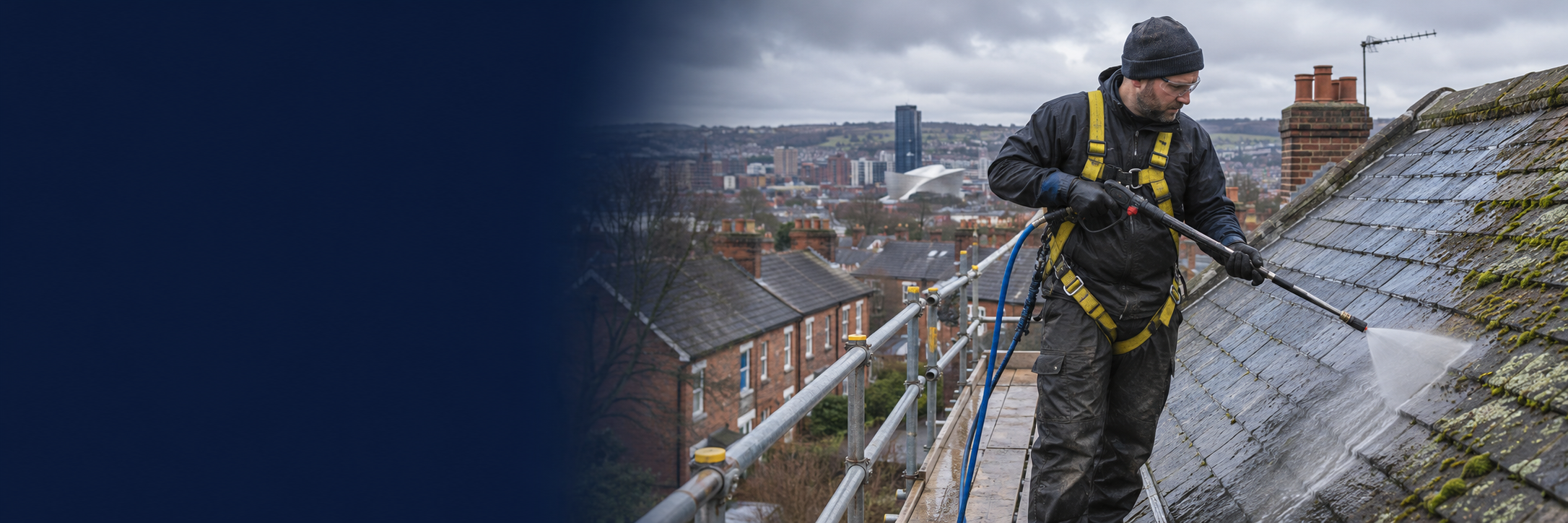
Roof cleaning in Sheffield and South Yorkshire
Roof cleaning in Sheffield and South Yorkshire calls for careful choices about materials, access and the way debris is managed. Our approach is built around the individual building, with clear scope and practical advice for householders, landlords and facilities teams.
Roof cleaning that starts with the roof, not a standard package
Roof cleaning in Sheffield requires an assessment of the covering, its condition, the access route and the deposits present. A slate roof on a terrace in Walkley cannot be treated in the same way as a concrete tiled roof on a detached property in Dore or a large industrial roof near the Lower Don Valley. Moss, algae, leaf litter and airborne soiling develop differently on shaded pitches, beneath trees and around valleys or dormers. We examine photographs and property details before proposing a visit, then explain the cleaning method, the likely constraints and the areas that should be excluded. The aim is a careful improvement of the roof surface and rainwater routes without promising that every mark can be removed. A sound covering, safe access and appropriate weather are prerequisites. If a roof needs repair, we say so before cleaning is discussed.
A survey of covering, drainage and access
The first conversation should establish the roof type, approximate height, pitch, age and the condition of tiles, slates, flashing and ridge details as far as these can be seen safely. We ask about previous leaks, fragile roof lights, solar panels, conservatories, extensions and nearby pedestrian routes. A property on a narrow street in Hillsborough may need a different access plan from a commercial unit in Attercliffe. Gutter runs and downpipes matter because loosened debris must be contained and collected, not pushed into the drainage system. We identify neighbouring boundaries, parked vehicles, planting and external electrical equipment that need protection. A written scope distinguishes roof cleaning from repair, gutter clearance and façade washing. This keeps the quotation intelligible and gives the owner an opportunity to flag hidden issues before work begins.
Choosing a method that respects the material
There is no universal pressure setting suitable for every roof. A high energy jet can disturb weak surfaces, force water beneath a covering or strip protective finishes. Depending on the condition and specification of the roof, a plan may involve controlled manual removal of moss, measured low pressure rinsing, carefully selected equipment or a staged combination. Delicate slate, ageing clay tiles, coated panels and flat roof membranes demand their own judgement. We do not recommend aggressive treatment simply because a surface looks heavily stained. Products, if appropriate, are selected for compatibility, controlled application and the surroundings, with attention to run off. The final method is confirmed after access and condition have been assessed. Where a test area is useful, it helps set realistic expectations about retained staining and the appearance of weathered material.
Safe access on South Yorkshire buildings
Work at height needs planning, supervision and suitable equipment. Roofs may have fragile sections, roof lights, steep pitches or edges that are not obvious from ground level. We consider whether work can be done from a protected platform or another safer arrangement, then select access for the particular building. A ladder is not a general substitute for a safe working position. Weather can change a plan quickly, especially where wet tiles, wind or winter frost affect footing and equipment. A protected exclusion area may be needed below the work. Residents, staff, deliveries and neighbouring access routes are taken into account. We pause or reschedule if conditions change materially. The quotation should describe the access assumptions and any specialist provision so that safety is treated as part of the service rather than an unexplained extra.
Moss, algae and other common deposits
Moss tends to collect where moisture persists, including shaded northern slopes, overlapping tiles and the foot of chimneys. Algae and dark staining may spread in thin films that look more dramatic when the roof is wet. Organic matter can also sit in valleys and around roof features, where it may impede the expected flow of rainwater. We identify the visible deposit before deciding how to lift it and how to keep it out of gutters. Cleaning changes appearance, but it does not eliminate the conditions that permit growth. Overhanging branches, persistent shade and exposure to wind driven debris can bring deposits back over time. We explain these limits plainly and suggest an inspection interval that reflects the property, rather than promising a fixed period of cleanliness.
Protecting gutters, walls and the ground below
A roof cleaning plan includes more than the roof plane. Moss and slurry can drop onto windows, paths, conservatory roofs and garden beds if not contained. We discuss practical protection and controlled collection before starting. Gutters are checked so that dislodged material does not become a new obstruction. Downpipes and surface drains can require temporary protection. If roof and gutter work are both requested, the order is set to avoid cleaning one area only to contaminate it again. At the end, visible work areas and ground level access routes are checked and the agreed waste is removed appropriately. The owner receives a clear account of any pre existing damage noticed during cleaning, since a cleaning team should not quietly treat a cracked tile or failed flashing as if it were a cleaning issue.
Homes with extensions, conservatories and solar equipment
A roof with a rear extension, conservatory or photovoltaic array needs additional care. The lower structure may not support a person or falling debris, and access can be awkward even when the main roof seems straightforward. Solar panels require a separate cleaning assessment, including electrical considerations and the manufacturer instructions for the module surface. We do not use the presence of panels as a reason to direct water beneath their mounting points. Paths for cables and inverters, where visible, are considered during preparation. Where the layout makes safe access impractical, we explain the limitation and discuss alternative staging or a specialist platform. The scope states which surfaces are included so that a homeowner knows whether the quote covers the covering, panels, gutters or only a defined section.
Commercial and managed property roofs
Landlords, managing agents and facilities teams often need work planned around opening hours, deliveries and building users. In the Lower Don Valley, Tinsley and Doncaster industrial areas, roofs can cover large surfaces with plant, roof lights and access restrictions. We gather plans or photographs where available, confirm the responsible contact and arrange a risk assessment before any programme is agreed. Cleaning may be phased to avoid disrupting access, with a record of completed sections and any areas that could not safely be reached. A property manager may also need a method statement, proof of insurance and an agreed waste route. These documents belong to the operational discussion, not to a generic claim that every industrial roof can be treated identically. We keep the cleaning scope separate from roofing maintenance and report defects observed without presenting a diagnosis beyond the cleaning remit.
Sheffield neighbourhoods and local conditions
Sheffield combines steep streets, tree lined residential areas, compact terraces and former industrial buildings. Roofs around Crookes, Broomhill and Ecclesall often present different access questions from warehouses around Attercliffe and Meadowhall. In Nether Edge and Sharrow, mature trees can contribute to leaf litter and shade. Hillsborough, Chapeltown and Handsworth include varied housing forms that require individual access checks. We also work across Rotherham, Barnsley and Doncaster, where building age, roof type and surroundings remain more useful to planning than the town name alone. The purpose of local knowledge is to ask better questions about space, neighbours, drainage and weather exposure. It does not replace a property specific inspection or justify an automatic price based on a postcode.
What a useful quotation should show
A useful quote identifies the roof area or sections included, the method proposed, access assumptions, protection of adjoining surfaces, debris collection and any gutter work. It should say whether products are intended and what conditions might change the plan after a closer inspection. Photographs of all accessible roof slopes, roof lights, nearby conservatories and the ground below help us prepare an initial assessment. We also ask for the address, approximate roof dimensions, recent repair history and the times when access is available. A telephone conversation may resolve many questions, but a written scope matters when several surfaces or occupants are involved. We do not present a price as a guarantee that an unsafe or damaged surface can be cleaned. If conditions differ on arrival, we discuss the revised approach before proceeding.
When cleaning is the wrong recommendation
Some roofs should not be cleaned immediately. Loose tiles, unstable ridge mortar, a failing membrane, signs of water entry or suspected fragile material call for a repair or specialist assessment first. An owner may also be considering replacement, in which case the value of cosmetic cleaning needs an honest discussion. We do not conceal a condition issue behind a promise of a brighter finish. A roof that appears sound from the street can reveal defects at closer range, so the agreed scope remains subject to a safe inspection. If access cannot be established without disproportionate risk, we say so. This protects the property and the people around it and avoids charging for work that is unlikely to deliver a sound result.
A considered sequence for mixed exterior work
When a property needs roof, façade, solar panel and ground level cleaning, the order of work affects the result. High surfaces are normally assessed first so that run off and loose deposits do not spoil work already completed below. The façade material and window details then shape what can be rinsed and when. Solar modules are considered separately to avoid using a roof treatment on glazing or electrical equipment. Paths and terraces can be scheduled after overhead debris has been controlled. This sequence is agreed for each building rather than treated as a rigid formula. It also lets us plan access equipment efficiently, explain how long different zones may be unavailable and set out which tasks require a separate specialist quotation.
Preparing the property for a cleaning visit
Please make sure a responsible contact can explain access to external water, gates and any shared areas, if these are needed. Vehicles beneath the working area may need to be moved, and windows or doors near planned rinsing should be closed. Tell us about known leaks, fragile tiles, buried cables, protected planting, pets and any recent roof treatment. In a terrace or managed building, neighbours or tenants may need notice before equipment is positioned. We agree the practical arrangements in advance so that the visit begins with safe setup rather than hurried changes. We may need to postpone in unsuitable weather. These preparations are not a substitute for the team’s own checks; they help ensure that the scope, protection and access assumptions remain accurate.
Care after cleaning and realistic maintenance
A cleaned roof can still show age, permanent weathering or variations between replacement and original tiles. Rain may reveal colours differently from dry conditions. We explain what has been removed, any areas left untreated and any observations that merit attention from a qualified roofer. Regular visual checks from ground level, sensible gutter maintenance and attention to overhanging vegetation can help manage future buildup. Avoid climbing onto the roof to inspect or repeat cleaning without a suitable access plan. A maintenance interval should reflect the roof material and exposure, not a blanket annual promise. When a covering reaches the end of its useful life, repair or replacement may be more appropriate than repeated cleaning. Our role is to help the owner make that distinction with clear, practical information.
Discussing roof cleaning across South Yorkshire
For a roof cleaning assessment in Sheffield, Doncaster, Rotherham or Barnsley, send photographs and a short description of the covering, visible deposits and access. Tell us whether you also need gutters, façade surfaces or solar panels considered, as each has a distinct method and scope. We can then discuss a realistic sequence, the information needed for a quotation and the next safe step. Contact Cleaning Company Sheffield on 0845 52 805 20 or use the cleaning quote form. The reply should focus on your building and the work requested, with no assumption that the same treatment suits every roof.
Request a roof cleaning assessment or call 0845 52 805 20.